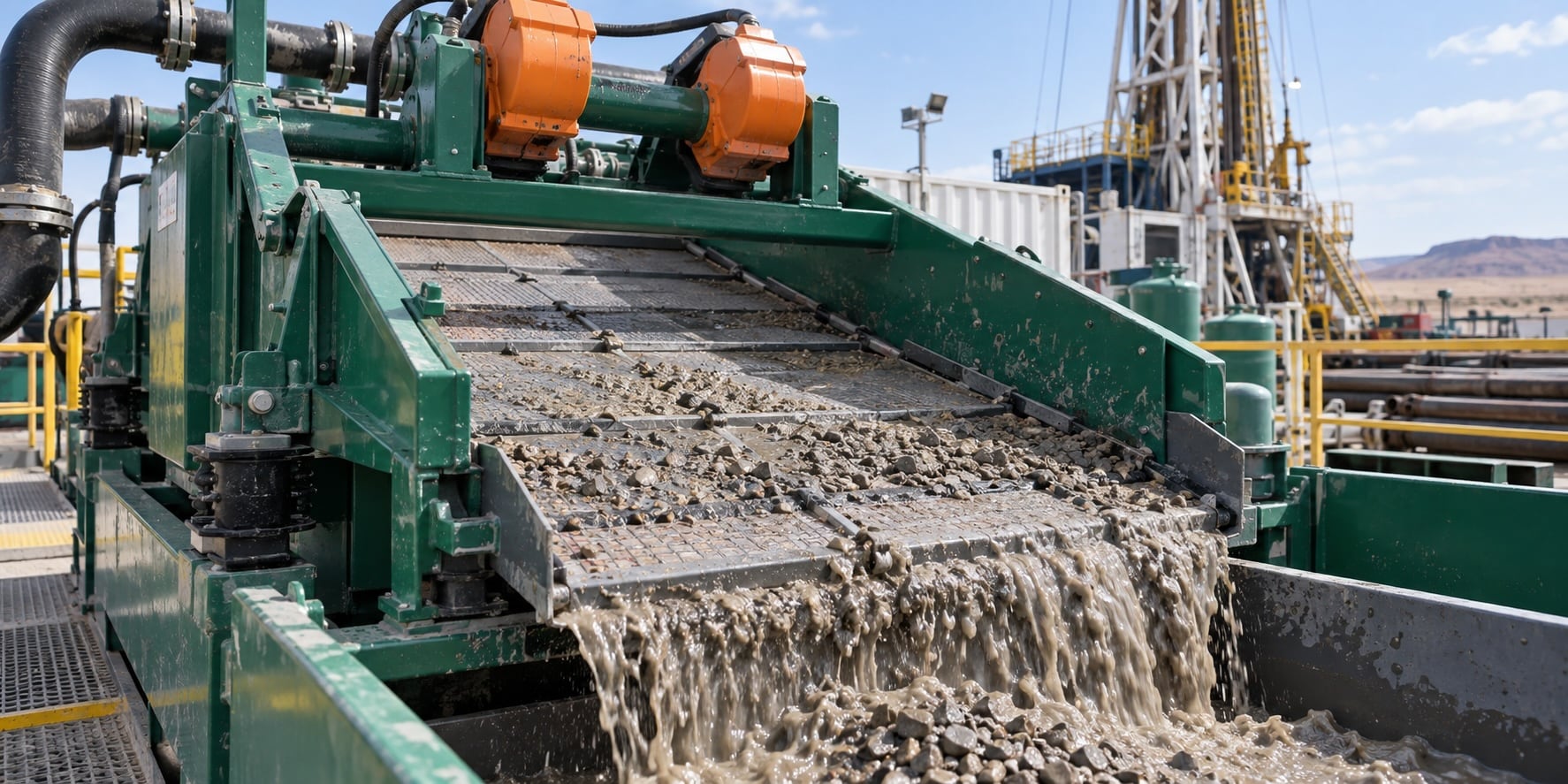
Shale shakers remove solids by moving returning drilling fluid across vibrating screens. Liquid and sufficiently small particles pass through the screen while larger drilled solids remain on the screen surface and convey toward discharge. The result depends on screen condition, particle size, fluid properties, feed distribution, vibration, and the available screen area.
A shale shaker is the primary mechanical separation stage in a solids control equipment system. It receives a high-volume return stream and removes a substantial share of the larger solids before the drilling fluid moves to tanks and later equipment. Effective primary separation reduces downstream loading and helps the entire solids-control system work more consistently.
Key takeaways
- Vibration conveys retained solids while liquid passes through the screen.
- Screen openings are only one factor in actual separation.
- Fluid properties, feed distribution, deck coverage, and screen condition affect removal.
- Screen damage, blinding, bypass, and overload can reduce shaker performance.
The Shale Shaker Separation Process
Returning drilling fluid reaches the shaker deck carrying drilled solids from the well. The flow lands on one or more vibrating screen panels. As the screen moves, retained solids travel toward the discharge end. Liquid and particles that can pass through the openings move into the tank below. This is the basic means by which a shale shaker separates the return stream into a solids discharge and recoverable drilling fluid.
The process is more complex than dry material passing through a stationary sieve. The drilling fluid forms a moving layer on the screen. Vibration helps convey solids and can help fluid move through the screen cloth. Particle shape, surface condition, fluid viscosity, and the amount of solids on the deck influence the manner in which material separates.
What the operator should observe
- Where the feed lands and how it spreads across the screen deck.
- Whether liquid passes through the screen without uncontrolled pooling.
- How solids move toward discharge and whether cuttings are excessively wet.
- Whether screen panels show tears, loose edges, blinding, or bypass.
- Whether solids appear to be reaching downstream equipment unexpectedly.
Why Vibration Matters
Vibration gives the shaker two important functions. First, it helps transport retained solids along the screen deck so they can leave the circulating system. Second, it changes how drilling fluid behaves on the screen surface. The motion can help fluid spread, pass through available openings, and avoid remaining stagnant beneath a bed of solids.
The shaker motion, deck angle, and feed distribution must work with the screen and fluid condition. Too little effective motion can reduce solids conveyance. A damaged or poorly operating shaker can create uneven loading, premature screen wear, or poor separation. The equipment should be inspected and operated according to the applicable instructions and site process.
Screen Openings and Particle Size
Screen openings influence the particle size that can pass, but they do not create an absolute field cut point. A particle may be shaped in a way that bridges an opening, may attach to a larger solid, or may move differently because of the drilling fluid. Fine solids, sticky material, and surface films can reduce the usable open area even when the screen panel looks intact.
For this reason, the screen should be selected and evaluated as a complete panel. The shale shaker screen selection guide for field teams explains the role of API designation, screen design, conductance, usable area, fitment, and fluid handling. A screen that is physically intact may still not be the right choice for the current flow and solids condition.
Why actual separation changes
Particle size, shale shape, drilling-fluid properties, solids concentration, flow rate, screen area, vibration, and screen condition all affect the result. A panel that performs well in one interval can flood or blind in another. The operator should use deck observations and downstream conditions to decide whether the screen and shaker are meeting the intended separation objective.
Deck Coverage and Fluid Handling
A controlled liquid pool on a screen deck is not automatically a problem. Fluid coverage can help distribute the flow across the available screen area. The concern is uncontrolled flooding, excessive fluid loss, or whole drilling fluid flowing over the discharge end because the screen cannot handle the current condition.
Observe the deck from feed to discharge. If liquid collects at the feed end, check the incoming flow and distribution. If fluid runs far down the screen, inspect for blinding, reduced screen area, high viscosity, damage, or a screen that is too fine for the current load. If the deck uses very little area, review whether a different selection could improve solids removal without overloading the shaker.
Fluid-handling checklist
- Confirm flow is distributed across the screen deck.
- Inspect the screen surface for blinding, tears, and uneven loading.
- Check the available screen area, panel tension, and deck support.
- Review drilling fluid, solids loading, and flow-rate changes.
- Make a controlled screen or operating change and record the result.
Why Shakers Lose Performance
Shaker performance can decline when screen openings blind, panels tear, feed distribution changes, solids loading increases, fluid properties change, or the deck and motion no longer support the operating condition. A torn screen lets additional solids pass through. Blinding does the opposite: it reduces the usable openings and makes it harder for fluid to pass through the screen.
Do not assume every problem requires a coarser screen. First inspect the panel, screen support, tension, feed distribution, vibration, flow, drilling fluid, and solids condition. A problem that appears at the shaker may originate in the return flow or the fluid system. A screen change is more effective when it addresses the actual cause.
Common shaker problems
- Blinding from fine, sticky, coated, or poorly wetted solids.
- Torn cloth, loose panel edges, failed bonding, or bypass around the screen.
- Flooding caused by flow, fluid properties, reduced screen area, or poor distribution.
- Uneven solids conveyance caused by feed pattern, screen condition, or shaker operation.
- Excess solids downstream caused by damaged screens or unsuitable separation conditions.
Connect Primary and Secondary Separation
The shale shaker affects every stage after it. When it removes the intended solids, the tank, hydrocyclone equipment, mud cleaner, and desander receive a more manageable load. When primary separation is bypassed or degraded, downstream equipment may need to handle solids it was not intended to process.
The desander maintenance and troubleshooting field guide provides related context for the feed, pump, cone, and suction conditions that can be affected by upstream solids loading. Reviewing both the shaker and the downstream result gives the crew a clearer view of the complete solids-control process.
Use Field Observations and Records
A brief operating record helps explain how the shaker is performing. Record the screen type, screen condition, flow, drilling-fluid observation, deck coverage, solids discharge, and reason for any adjustment. This information helps the next crew compare the current condition with the last stable operating period.
Use one controlled adjustment at a time when practical. Changing the screen, flow, deck settings, and fluid treatment together makes it difficult to determine what improved or reduced solids removal. A defined trial creates useful information for future screen selection and shaker operation.
Verify Screen Installation and Downstream Results
After a screen change, confirm that the panel fits the deck, engages with the tensioning system, and seals around the edges. Check the screen frame, hook strips, clamps, rails, support bars, and gaskets before returning the shaker to normal operation. A poor fit can create bypass or early panel damage that looks like a separation problem.
Then observe the downstream result. Check the receiving tank, later solids-control equipment, and the condition of the recovered drilling fluid. A screen change should be evaluated by the complete result: deck behaviour, solids discharge, fluid recovery, and the load delivered to the next stage. This verification keeps primary separation connected to the full fluid system.
Frequently Asked Questions
How does a shale shaker remove solids?
It uses vibrating screens to retain larger drilled solids and convey them to discharge while recoverable drilling fluid passes through the screen into the active system.
Why does a shale shaker screen blind?
Fine, sticky, reactive, coated, or poorly wetted solids can reduce the usable screen openings. Fluid condition, solids loading, screen design, and operating conditions can all contribute.
Is a wet shaker screen always overloaded?
No. A controlled fluid layer can help use the available screen area. The concern is uncontrolled flooding, poor solids conveyance, or fluid running over the discharge end.
What should be checked before changing a screen?
Inspect screen condition, panel fitment, feed distribution, flow, drilling-fluid properties, solids loading, deck coverage, and shaker operation before changing the selection.