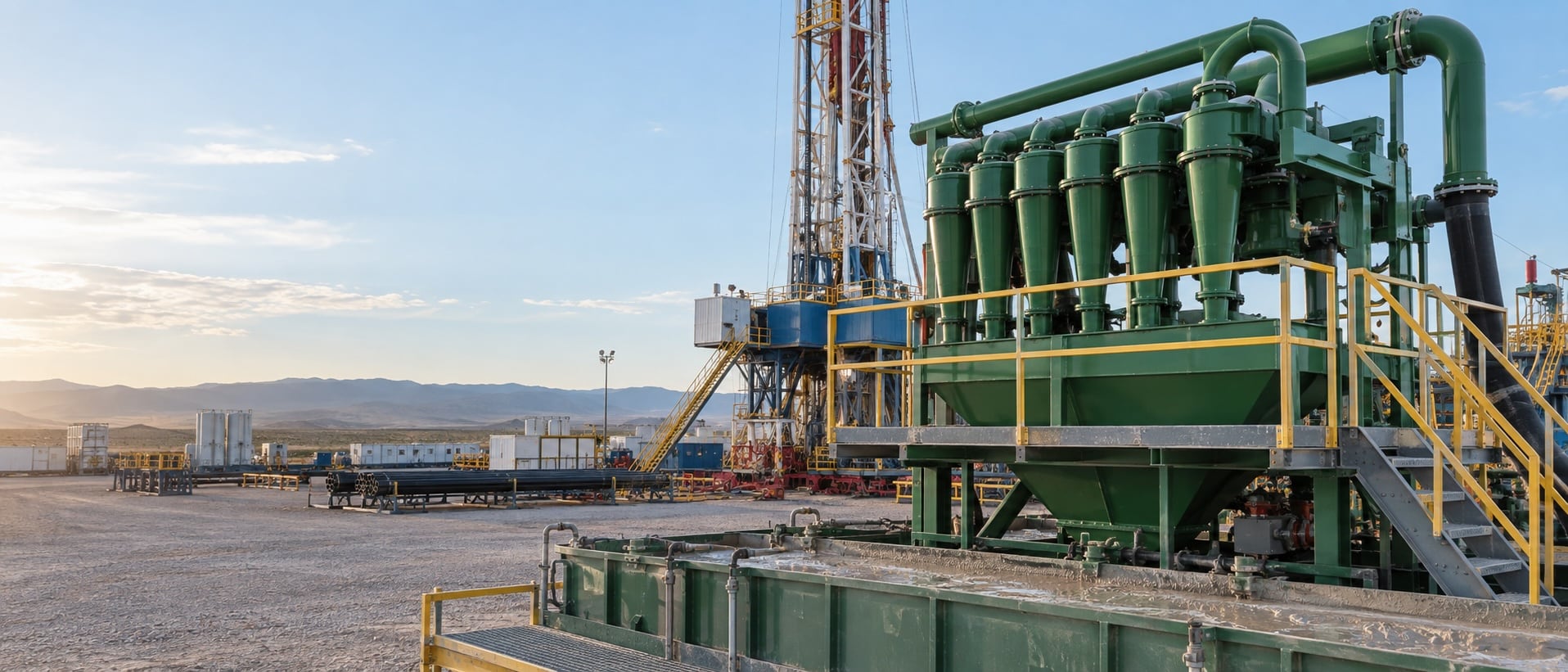
Effective desander maintenance and troubleshooting starts with the feed system and the discharge pattern at every cone. Check actual operating conditions, inspect for roping or plugging, verify pump and suction performance, then inspect wear points and plumbing before changing a setting or replacing a component.
A desander separates a portion of the drilled-solids stream through hydrocyclones. It cannot compensate for unstable feed, restricted suction, air entering the pump, or a primary stage that sends an excessive solids load downstream. Treat the desander as one part of the solids control equipment system, with performance affected by the entire fluid path.
Key takeaways
- Read the discharge pattern at every operating cone.
- Verify feed pressure, flow, and suction condition before blaming the cyclone.
- Inspect apexes, inlets, headers, hoses, and connections for wear or blockage.
- Use recurring symptoms to plan maintenance rather than repeatedly changing settings.
What the Desander Should Do
A working desander receives a consistent slurry feed, creates a controlled swirling flow inside each cone, and separates heavier solids toward the apex while returning the liquid-rich stream through the overflow. The actual result depends on cone condition, feed energy, fluid properties, solids loading, and whether the cone receives stable flow.
Start with the process role
Before troubleshooting, confirm the desander is placed and operated for the current fluid program. Upstream primary separation affects the load delivered to the hydrocyclones. The explanation of how shale shakers remove solids during primary separation helps identify whether screen performance or bypass may be contributing to the downstream problem.
Read the Discharge Pattern at Every Cone
The discharge pattern gives the operator a direct observation point. A consistent spray commonly indicates that material is moving through the apex. A rope-like discharge can indicate excess solids loading, an unsuitable opening, or a loss of correct feed conditions. No discharge can point to a restriction, a plugged apex, inadequate feed, or a cone that is not receiving material.
Walk the complete cone bank
One cone operating normally does not establish that the whole desander is operating correctly. Compare the cone bank for uneven spray, drips, vibration, leaking connections, abnormal noise, and differences in discharge. Record which cone shows the symptom so maintenance can focus on the correct location.
Symptom check
- Roping: check solids loading, feed condition, apex wear, and restrictions.
- No discharge: inspect the apex, inlet, header, and actual feed to the cone.
- Uneven discharge: compare cone condition, plumbing, and distribution across the manifold.
- Fluctuating pattern: check suction stability, air entry, pump condition, and changing flow.
Verify Feed, Pump, and Suction Conditions
A desander needs a stable slurry supply. A worn pump, restricted suction, entrained air, collapsing hose, partially closed valve, or shared demand can reduce the feed available to the cone bank. Increasing pressure without finding the cause can accelerate wear while leaving the underlying issue unresolved.
Check the feed path
Trace the path from the supply compartment to the pump and through the manifold. Look for poor tank level, accumulated solids near suction, damaged hose, loose connections, bypass paths, or equipment drawing from the same pump. Confirm that the observed pressure is stable and meaningful for the actual fluid and system condition.
Inspect Wear, Blockage, and Connections
Hydrocyclone performance changes as apexes, inlets, cone liners, clamps, and hoses wear. Small changes at an opening can alter flow and separation behaviour. During planned desander maintenance, isolate the equipment through the applicable site process, inspect components, and replace worn or damaged parts with compatible components.
Maintenance inspection checklist
- Inspect each apex for wear, damage, and accumulated material.
- Check cone bodies, inlets, clamps, gaskets, and manifold connections.
- Inspect hoses for abrasion, soft spots, kinks, and leakage.
- Check pump condition, suction cleanliness, and valve position.
- Remove debris from headers and verify that every cone receives feed.
- Record replaced components and recurring wear locations.
Separate Cone Problems From System Problems
Desander troubleshooting is more reliable when the team separates a cone problem from a system problem. If one cone ropes while neighbouring cones appear normal, inspect that cone and its local feed path. If the entire bank changes at once, investigate the pump, suction, incoming solids load, fluid condition, or operating flow before replacing multiple components.
Use controlled changes
Change one variable at a time where practical. Record the initial discharge pattern, feed observation, component condition, and result. This prevents a repair from being credited to the wrong cause and creates useful maintenance history for the next crew.
Reduce Repeat Desander Failures
Recurring wear or plugging often reveals a process condition. Review incoming solids, upstream screen condition, tank cleanliness, pump operation, and the way the desander is integrated with downstream equipment. The mud cleaner operating principles and hydrocyclone separation guide provides related context when a screen-and-cone stage shares the same fluid system.
Keep a practical maintenance record
Record the date, desander symptom, cone location, discharge pattern, pump and suction observations, parts replaced, and verification result. A concise record helps identify whether maintenance is correcting normal wear or repeatedly treating the same operating problem.
Check Mud, Tank, and Drilling Conditions
A desander works on the slurry supplied to it. Changes in drilling rate, formation response, mud condition, dilution, weighting material, or contamination can change the volume and character of solids reaching the hydrocyclones. A maintenance decision should therefore include a review of the active mud system, not only the separator itself.
Start at the tank supplying the feed pump. Confirm that the tank level supports steady suction, the compartment has reasonable agitation, and solids are not building around the suction point. A tank with settled material or poor circulation can starve the pump intermittently even while the overall mud volume appears adequate. That instability can show up as fluctuating desander performance.
Questions to ask during a drilling change
- Has the drilling interval changed the type or volume of solids returning to the system?
- Has the shale shaker screen configuration changed, torn, blinded, or been bypassed?
- Has the tank level, agitation, or suction condition changed?
- Has the feed pump begun serving another piece of equipment?
- Has the mud become more difficult to move through the system?
Inspect the Hydrocyclone Assembly Methodically
A hydrocyclone is a wear component as well as a separation device. The cyclone body, inlet, apex, overflow, clamps, gaskets, and connecting hose all influence the path of the slurry. Inspect the hydrocyclone assembly with the equipment safely isolated and follow the relevant operating manual for model-specific limits, removal steps, and replacement parts.
Look for a worn apex, damaged cyclone body, loose clamp, abraded hose, blocked nozzle, or material adhering near a discharge outlet. These conditions can alter the underflow, create leakage, and make one desander look unreliable even though the pump and tank are operating normally. Replace damaged components with compatible parts rather than forcing a worn component to remain in service.
Hydrocyclone inspection points
- Inspect the cyclone body for cracks, abrasion, distortion, or loose connections.
- Check each nozzle and apex for wear, obstruction, and consistent underflow.
- Inspect wear liners where the equipment design uses them.
- Check the discharge valve and overflow route for restriction or unintended backpressure.
- Verify that the manifold supports even distribution to all operating hydrocyclones.
Use a Repeatable Diagnostic Sequence
Good troubleshooting common issues does not require changing every setting at once. Start with the symptom, then follow the path of the fluid: supply tank, suction, pump, manifold, hydrocyclone, underflow, and return route. This sequence helps the crew find whether the problem relates to feed energy, a restriction, wear, or a system fault.
For example, low or unstable feed pressure can originate at the pump suction rather than the cyclone. A rope-like underflow may be linked to a high solids load from drilling, but it may also involve an apex condition or poor distribution. An empty discharge can be a plugged nozzle, no solids reaching the cone, or a cone not receiving enough feed. The observation is the starting point, not the final diagnosis.
Diagnostic checklist
- Define the visible problem at each affected desander.
- Check the supply tank, mud level, and suction path.
- Observe pump operation, feed pressure, vibration, and leakage.
- Inspect the manifold and compare distribution across the cone bank.
- Inspect the hydrocyclone, nozzle, apex, and underflow.
- Confirm the return path is open and equipment can discharge as intended.
- Make one controlled correction, then observe the result before another.
Coordinate Desanders With Shakers and Desilters
The desander does not operate alone. A primary shaker that removes solids effectively reduces the load downstream. A shaker with damaged screens or poor feed distribution can send material into the tank and feed pump that changes the demand on the hydrocyclones. Similarly, desilters and other solids control equipment need a defined place in the process so fluid does not take an uncontrolled short path around treatment stages.
Review the process route when a desander problem repeats. If one pump supplies multiple devices, define which equipment has priority. If desanders share a tank with other equipment, confirm that the tank flow and agitation support stable suction. A simple, traceable system is easier to operate, maintain, and troubleshoot than a system where every pump and line can serve several changing duties.
Maintenance tips for the whole system
Include the shaker, supply tank, pump, manifold, desander, and return route in regular inspections. Checking these points together reduces costly repairs caused by running equipment under unstable conditions. It also gives the crew a better basis for deciding whether to clean, adjust, repair, or replace a component.
Verify Performance After Maintenance
Maintenance is complete only after the desander performs as expected under actual mud conditions. Return the equipment to operation through the approved sequence, then observe the pump, feed pressure, cone bank, underflow, overflow, and tank condition. The mud should move through the intended route without a new restriction, leak, or unstable discharge pattern.
Compare the results with the condition before maintenance. If the mud is still carrying a high solids load, look upstream to the shaker screens, drilling rate, and return-flow conditions. If the pump remains unstable, revisit the suction, tank level, and shared equipment demand. If one hydrocyclone still behaves differently, inspect that cone again rather than adjusting the whole system.
Field verification checklist
- Observe the mud supply and tank level after the equipment returns to service.
- Check the feed pump for stable operation, leakage, and unusual noise.
- Compare every desander discharge and underflow pattern.
- Inspect shaker screens and the incoming solids load when the cone bank remains overloaded.
- Record the drilling condition, mud observation, corrective action, and verification result.
Use the record to refine future maintenance. A desander that repeatedly requires the same repair may be reacting to an upstream mud or drilling condition, not simply a failed component. Consistent observation helps the crew protect equipment, improve troubleshooting, and keep the solids-control process operating as intended.
Planned maintenance should also include basic housekeeping around the desander package. Keep access clear, prevent loose material from entering an open tank or suction area, inspect guards and support hardware, and identify leaks before they reach walkways or adjacent equipment. Check all motors and controls according to the site maintenance plan, but do not use a motor check as a substitute for inspecting the pump, cone bank, and fluid path. Regular inspections work best when they combine component condition with a clear observation of the mud, flow, and discharge pattern during drilling operations.
Before closing the task, confirm that the work area is orderly, maintenance tools are removed, guards are restored, and the desander is ready for normal monitoring. This final check supports reliable operation and gives the next crew a clear starting condition.
Frequently Asked Questions
Why is a desander cone roping?
Roping can occur when the cone is overloaded, the feed condition changes, the apex is worn or restricted, or the cone is not operating within the intended system conditions. Inspect the complete feed path before making a setting change.
Why does one cone have no discharge?
Check for a plugged apex or inlet, debris in the header, a damaged component, or a feed-distribution issue. Compare the affected cone with adjacent cones before removing it from service.
Can a feed-pump issue look like a desander problem?
Yes. Restricted suction, air entry, wear, unstable flow, and shared pump demand can reduce the energy available to the desander and change every cone’s performance.
What should be included in desander maintenance?
Inspect the cones, apexes, inlets, headers, hoses, clamps, seals, pump, suction, and operating observations. Follow the equipment-specific maintenance instructions and site procedures.