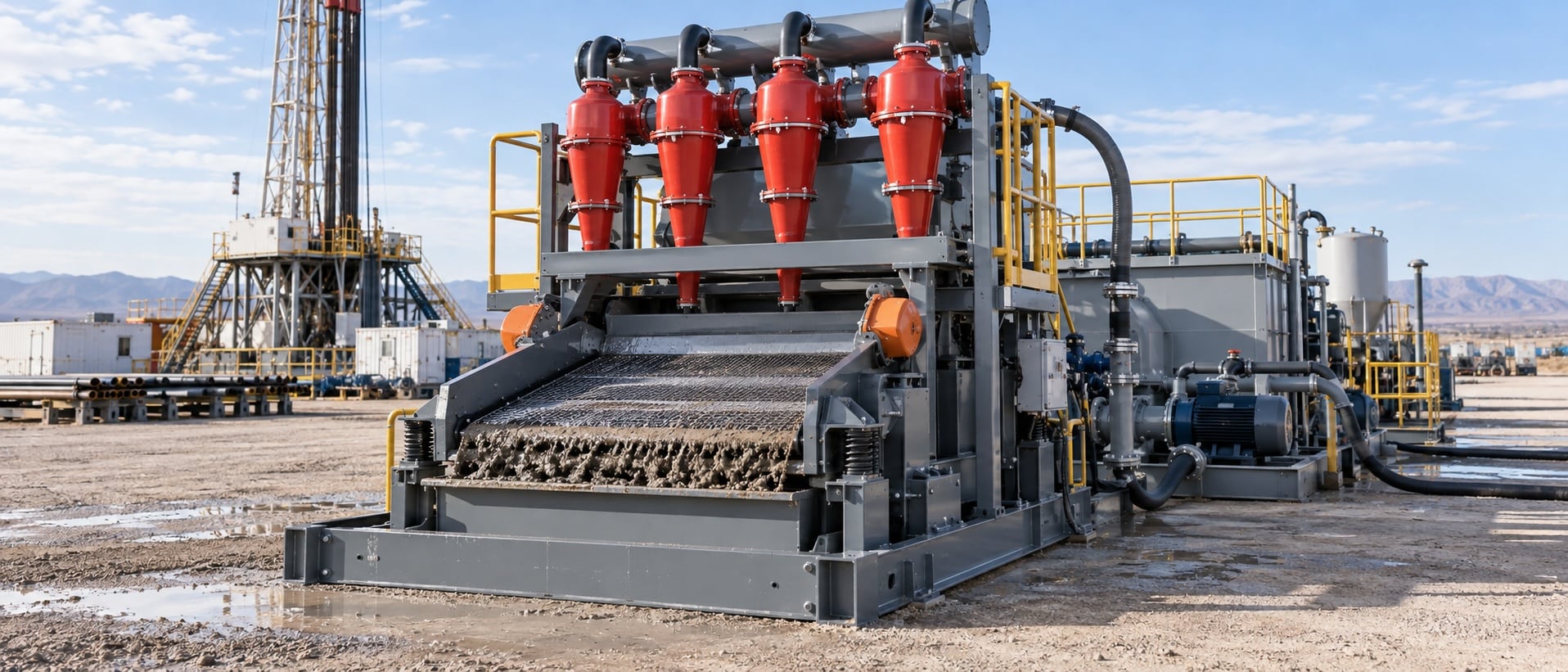
A mud cleaner combines hydrocyclone separation with a fine vibrating screen to remove solids from drilling fluids while returning usable fluid to the active system. Good performance depends on stable feed, correct screen condition, appropriate cone operation, clean tank flow, and regular maintenance of the complete solids-control package.
A mud cleaner is secondary purification equipment within the solids control equipment system. It receives drilling fluid after primary separation, concentrates selected solids through hydrocyclones, and processes the underflow on a screen. The purpose is not simply to add another machine. The purpose is to make a defined solids-removal step work with the tank, pumps, shale shaker, and the rest of the rig.
Key takeaways
- A mud cleaner uses a screen-hydrocyclone combination, not either component in isolation.
- Stable slurry feed and clean suction conditions affect cleaner efficiency.
- The hydrocyclone separates material; the screen handles the cone underflow.
- Screen condition, tank flow, and maintenance directly affect performance.
The Mud Cleaner Working Principle
The working principle starts with a slurry supply pump. The pump draws drilling fluids from the intended tank compartment and conveys the slurry to the hydrocyclone manifold. Inside each cone, the flow rotates at high velocity. This mechanical action separates part of the solids from the liquid-rich stream. The overflow returns to the designed fluid path, while the underflow reaches the vibrating screen.
The screen hydrocyclone arrangement is important because the cone underflow still contains fluid. A correctly operating mud cleaner lets the screen retain the concentrated solids while fluid passes through the screen mesh. The result is a multi-stage separation process that efficiently removes solids without treating the whole flow as waste.
Cleaner components and flow path
- Supply tank and slurry supply pump
- Feed hose, manifold, and hydrocyclone cone
- Underflow discharge and vibrating screen
- Screen deck, recovered fluid path, and solids discharge
- Controls, guards, hoses, and maintenance access
How the Hydrocyclone and Screen Work Together
A hydrocyclone does not replace shaker screens, and shaker screens do not replace the hydrocyclone. The cone concentrates material into the underflow. The screen then separates the concentrated solids from recoverable drilling fluid. If the screen blinds, tears, or floods, the mud cleaner can lose the benefit of the hydrocyclone stage. If the cone receives unstable feed, the screen may be asked to manage an inconsistent underflow.
For this reason, operators should observe the cone discharge and the screen at the same time. A consistent underflow and a controlled screen pattern indicate that the cleaner components are working together. A changing cone pattern, excess liquid at discharge, screen damage, or solids bypass calls for a check of the feed pump, screen mesh, tank condition, and operating load.
What the screen should show
The vibrating screen should receive an even, manageable flow from the hydrocyclone. Solids should move toward discharge without persistent pooling, excessive fluid loss, or material bypassing the screen. Screen selection must suit the actual fluid, solids loading, and equipment condition. Do not change a screen only because the visible symptom appears at the deck; trace the condition back through the cone and supply system first.
Feed, Tank, and Pump Conditions
The mud cleaner is only as stable as its feed. The supply tank needs sufficient, well-mixed drilling fluid. The feed pump needs clear suction, sound hoses, correct valve positions, and enough available flow for the assigned duty. A restricted suction, low tank level, air entry, worn pump, or shared pump demand can change hydrocyclone performance even when the cleaner itself appears intact.
Tank layout also influences the quality of the feed. A compartment with poor agitation or short-circuiting can send inconsistent solids concentrations to the cleaner. The related solids control tank layout considerations for process flow explain why a clear suction and downstream discharge route matters. The mud cleaner should process the fluid presented to it, not repeatedly draw and discharge within an uncontrolled loop.
Feed-condition checklist
- Confirm tank level, agitation, and suction cleanliness.
- Inspect the supply pump, hose, fittings, and valves.
- Observe feed stability before changing a hydrocyclone or screen.
- Verify the return route does not short-circuit back to the same suction area.
- Record changes in drilling fluids, flow, and solids loading.
Relationship to Primary Separation
Primary separation affects every downstream stage. The explanation of how shale shakers remove solids in the primary stage is relevant because damaged or blinded shaker screens can increase the solids load delivered to the tank and mud cleaner. Traditional shakers remove the larger portion of the return stream first. The mud cleaner then handles a more specific separation duty.
When the rig changes drilling conditions, screen configuration, or flow rate, review the mud cleaner rather than assuming the previous setup will behave the same way. A cleaner that performs well at one solids load may need a different operating response when the primary shaker is handling a different volume or particle size distribution.
Maintenance and Performance Checks
Regular maintenance protects cleaner efficiency. Inspect the hydrocyclone, cone openings, hoses, clamps, feed connections, screen deck, screen mesh, guards, and support structure. Check for leaks, wear, vibration, loose hardware, plugged openings, and abnormal underflow. Follow the equipment-specific maintenance instructions and site procedures when isolating, inspecting, or replacing components.
Use performance observations as maintenance data. A repeated cone symptom may indicate wear or a feed-system problem. A repeated screen issue may indicate unsuitable loading, poor screen tension, or an upstream condition. The desander maintenance and troubleshooting field workflow provides a related diagnostic approach for hydrocyclone feed, cone condition, and suction checks.
Maintenance checklist
- Inspect hydrocyclone cones and underflow openings for wear or blockage.
- Check screen condition, tension, support, and discharge pattern.
- Inspect pump suction, hoses, clamps, valves, and leak points.
- Verify guards, controls, and maintenance access before operation.
- Record the component, symptom, corrective action, and result.
Verify Mud Cleaner Performance
After a repair or operating change, verify the complete flow path. Observe the tank, supply pump, hydrocyclone discharge, vibrating screen, recovered fluid, and solids discharge. Confirm that the mud cleaner is receiving stable fluid, the cone is discharging as expected, and the screen is separating material without an uncontrolled loss of usable fluid.
Make one controlled change where practical, then compare the result. This method helps distinguish a screen problem from a pump problem, a cone problem from a tank problem, or a maintenance issue from a change in drilling fluids. It also gives the crew a repeatable way to protect the mud cleaner and improve solids control performance.
Respond to Common Operating Changes
When the mud cleaner shows a change in performance, begin with the operating condition rather than an immediate component change. Higher solids loading can increase the demand on the hydrocyclone and screen. A different drilling fluid can change flow behaviour. A change in shale shaker performance can alter the material reaching the supply tank. Each condition may require a different response, even when the visible symptom is similar.
If the screen receives excessive liquid, inspect the cone underflow, screen condition, and feed stability. If solids carry over, inspect the screen mesh, screen support, cone condition, and the current load on the system. If the feed is unstable, check the tank, suction, pump, and valves before adjusting the mud cleaner. This sequence keeps the response connected to the actual working principle of the equipment.
Operating response checklist
- Identify whether the change began at the tank, pump, hydrocyclone, or screen.
- Compare current drilling fluids and solids loading with the prior operating condition.
- Inspect shaker screens and primary separation before increasing downstream demand.
- Check the cone underflow and screen discharge together.
- Record the result of each controlled adjustment for future maintenance and performance review.
Use a routine observation log during normal drilling. Note the supply tank, pump sound, hydrocyclone discharge, screen coverage, solids discharge, and any adjustment made by the crew. A short log connects maintenance work to performance trends and helps identify the first sign of a developing problem. It also makes shift handover clearer when the mud cleaner is operating near a change in flow, solids load, or fluid condition.
Review the log with the operating team after a significant change. The record can confirm whether the mud cleaner, screen, pump, and tank returned to stable performance or whether further inspection is needed.
Frequently Asked Questions
What does a mud cleaner do?
A mud cleaner uses hydrocyclones and a vibrating screen to concentrate selected solids and separate them from drilling fluid within a defined solids-control process.
Why does a mud cleaner need a screen?
The hydrocyclone underflow contains both solids and fluid. The screen retains the concentrated solids while allowing recoverable fluid to pass through.
What affects mud cleaner performance?
Feed-pump condition, tank flow, hydrocyclone condition, screen mesh, solids loading, drilling-fluid properties, maintenance, and the upstream shale shaker all affect performance.
When should a mud cleaner be inspected?
Inspect it during planned maintenance and whenever cone discharge, feed stability, screen behaviour, leakage, vibration, or solids removal changes unexpectedly.