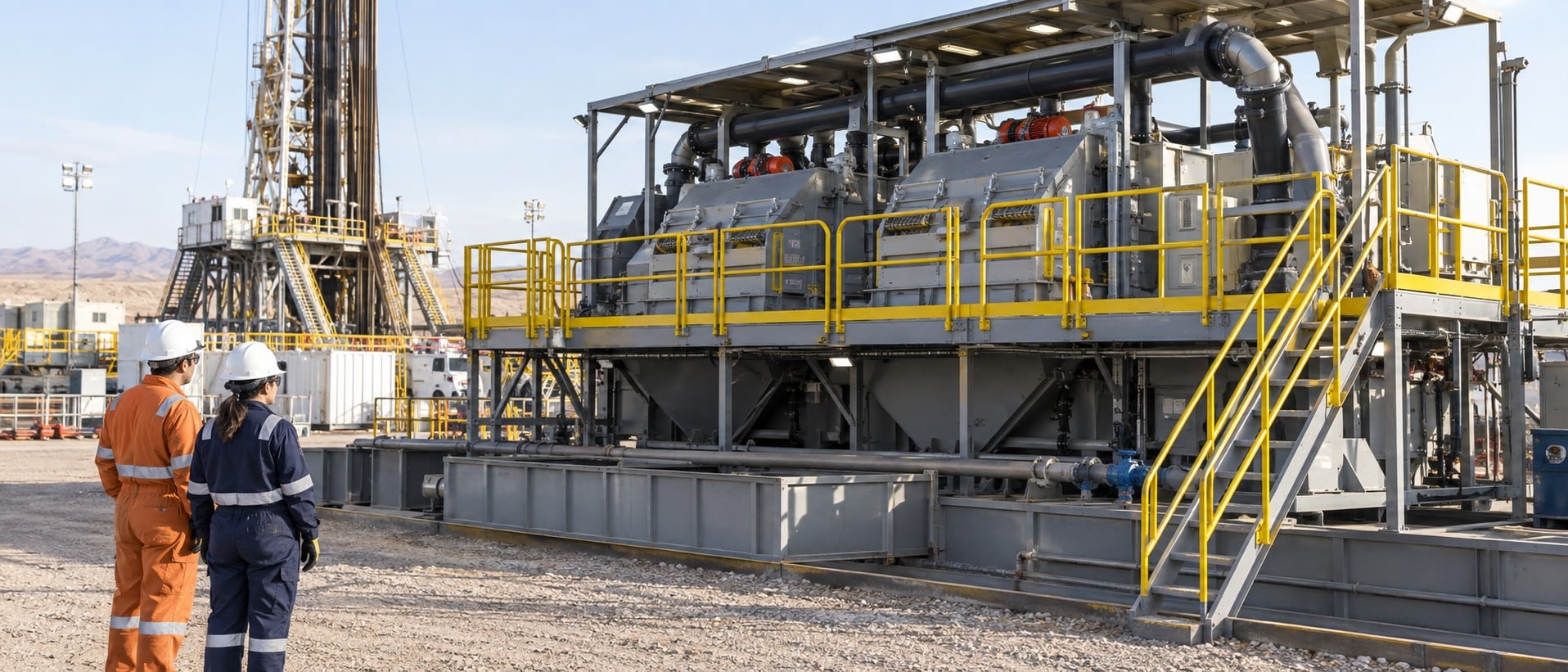
Solids control equipment safety practices start with a clear work plan, guarded equipment, controlled energy, orderly access, and an accurate understanding of the fluid system. Shakers, pumps, hydrocyclones, centrifuges, tanks, hoses, and screens each create different hazards that crews should address through site procedures, equipment instructions, and task-specific controls.
Solids control equipment uses mechanical methods to remove undesirable solids from drilling fluid. It also places workers near moving components, pressure, electrical systems, heavy equipment, fluid exposure, elevated access, and cleaning work. Safe operation depends on recognizing the task, the equipment condition, and the possible energy or flow paths before work begins.
The solids control equipment system should be considered as a connected process. A work activity at a shaker, pump, tank, or centrifuge can affect connected lines, transfer flow, and other equipment. Do not assess one machine without considering the system around it.
Key takeaways
- Identify moving equipment, energy, pressure, fluid, and access hazards before work begins.
- Use guards, isolation, housekeeping, and site procedures together.
- Keep crews clear of bypass, pinch, spray, and unexpected-flow areas.
- Plan maintenance and cleaning as controlled work, not routine shortcuts.
Recognize the Hazards Around Solids Control Equipment
Common hazards include rotating or vibrating equipment, belts and drive components, pinch points, pressurized hoses, fluid spray, slippery surfaces, electrical energy, stored pressure, hot fluid, chemical exposure, and limited access around tanks. The actual hazards depend on the equipment, fluid, current operation, and task being performed.
A crew should evaluate whether equipment is running, what can move, what can start automatically, and where fluid can travel. A pump may affect more than one line. A tank may receive flow from another part of the system. A shaker or centrifuge may have exposed hazards if guards are missing or maintenance is incomplete. These conditions require a task-specific review.
Pre-task equipment check
- Identify the equipment, work area, connected lines, and normal flow path.
- Inspect guards, access platforms, lighting, hoses, valves, and housekeeping.
- Identify electrical, mechanical, pressure, gravity, and fluid-energy sources.
- Review the current drilling-fluid condition and possible exposure points.
- Confirm the site process for the planned work and emergency response.
Machine Guarding and Safe Access
Proper machine guarding is a basic defense around moving solids control equipment. Guards help separate workers from belts, couplings, rotating shafts, vibrating screen mechanisms, and other moving components. Do not remove, bypass, or modify a guard to make observation, cleaning, or maintenance easier. If access is needed, use the applicable isolation and work process.
Access also matters. Walkways, stairs, platforms, handrails, lighting, and hose routing influence whether a crew can observe and service equipment without creating a slip, trip, or fall hazard. Keep access routes clear and address leaks, mud accumulation, loose tools, and poorly routed hoses before they become routine conditions.
Access and guarding checklist
- Confirm guards are in place and secure before operating equipment.
- Keep platforms, stairs, and walkways free of mud, tools, and hoses.
- Inspect handrails, grating, steps, and lighting for the planned work area.
- Route hoses and electrical leads to avoid pinch, trip, and abrasion hazards.
- Report damaged guards, loose handrails, leaks, and access restrictions promptly.
Isolate Energy, Movement, and Flow
Maintenance, cleaning, inspection, and repair can require more than switching off a motor. Depending on the task, workers may need to address electrical energy, mechanical rotation, trapped pressure, gravity, fluid transfer, automatic controls, and connected pumps. Follow the site isolation and verification process for the exact equipment and work scope.
Visible inactivity is not the same as a controlled condition. An agitator can be connected to power. A line can receive fluid from another tank. A pump can create pressure. A centrifuge can retain motion after shutdown. Before work begins, identify what could move, start, release, or enter the work area and confirm the appropriate controls are in place.
Confirm isolation before maintenance
Trace connected equipment and lines, confirm the isolation points, verify the required condition, and communicate the work status to the affected crew. Site procedures and equipment instructions govern specific isolation requirements. If the flow path or energy source is unclear, stop and resolve the condition before proceeding.
Manage Drilling-Fluid and Spray Exposure
Drilling fluids, cuttings, wash water, additives, and residue can create exposure concerns during normal operation and maintenance. The route of exposure may include splashing, mist, leaks, pressure washing, open tanks, transfer hoses, and cleaning work. Use the relevant fluid information, task controls, and site requirements when selecting protective equipment and planning the job.
Do not direct pressure washing or fluid spray toward another worker, an unprotected access area, or equipment not intended to receive the stream. Control runoff, collect waste where required, and keep hoses and fittings in good condition. A small leak can become a larger hazard when pressure, vibration, or poor housekeeping is involved.
Control the work area
- Inspect hoses, clamps, fittings, and spray equipment before use.
- Keep non-essential personnel clear of pressure, spray, and discharge areas.
- Use the task-specific protective equipment identified by the site process.
- Control runoff and residue so they do not create a slip or exposure hazard.
- Review fluid information before cleaning, transfer, or maintenance work.
Operate Shakers and Screens Safely
Shale shaker equipment is the first line of mechanical solids removal, but it requires attention to guards, vibration, screen condition, access, and fluid flow. Avoid bypassing shale shakers simply to keep fluid moving. Bypass can transfer undesirable solids downstream and expose the rest of the solids-control system to a load it was not intended to handle.
Screen changes and inspections should be planned around the operating condition. Check for damaged screen panels, loose edges, blocked openings, fluid loss, and unsafe access before handling a screen. The solids control tank layout considerations guide provides related context for the flow paths, access, tank conditions, and pump connections around primary removal equipment.
Centrifuge, Pump, and Hydrocyclone Work
Centrifuges, pumps, and hydrocyclones introduce additional safety considerations because they combine high-speed rotation, pressure, hoses, liquid flow, and maintenance access. Check guards, connections, vibration, leakage, and the condition of the surrounding work area during normal rounds. Do not troubleshoot a mechanical concern by adjusting operating settings without first assessing the equipment condition.
The solids control centrifuge performance factors guide explains how feed condition, speed, discharge routes, and maintenance affect equipment operation. When a centrifuge shows abnormal vibration, leaking fluid, damaged guards, or uncertain operation, use the site work process before returning it to service.
Equipment-performance observations
Record abnormal noise, vibration, leaks, pressure changes, screen damage, pump response, and recurring maintenance needs. These observations can identify a developing problem before it creates a failure, fluid release, or unsafe work condition.
Tank, Cleaning, and Housekeeping Work
Tanks and cleaning tasks can involve settled solids, connected lines, agitators, wet surfaces, washdown, and limited access. Plan the work before opening a hatch or beginning a cleanout. Remove material externally where practical, identify energy and flow sources, and follow the applicable site process if the work involves confined or restricted areas.
Housekeeping is part of equipment safety, not a separate cosmetic task. Mud on a walkway, a leaking hose, an unguarded coupling, or a blocked access point can affect the next crew. Restore the work area after maintenance, remove tools and temporary hoses, and report conditions that require repair or follow-up.
Training, Communication, and Verification
Workers need clear information about the equipment, current fluid-system condition, work scope, and controls that apply. Communication matters during isolation, equipment startup, maintenance, screen changes, transfer operations, and any change to the normal layout. A good handover identifies equipment status, active work, isolation points, unusual conditions, and unresolved hazards.
Verify the result after the work. Confirm guards are restored, valves are in the intended position, hoses and tools are removed, access is clear, and equipment is ready for the next operating step. This final review helps prevent a temporary maintenance configuration from becoming an unintended operating condition.
Plan Startup, Shutdown, and Abnormal Conditions
Startup and shutdown create changing conditions in the solids-control system. Pumps begin moving fluid, tanks receive transfer flow, screens start vibrating, and centrifuges accelerate. A normal operating area can change quickly when equipment starts or stops. Follow the site startup and shutdown process, communicate the change, and keep people clear of equipment and lines that may move or receive flow.
Before startup, confirm that equipment is assembled, guards are restored, access is clear, valves are in the intended position, and temporary maintenance controls have been removed when authorized. During startup, observe for leaks, vibration, unusual noise, pressure change, unexpected flow, or screen and hose movement. If an abnormal condition appears, use the applicable process to assess it rather than continuing on the assumption that it will correct itself.
Startup observation checklist
- Confirm the planned equipment sequence and the current work status.
- Check guards, hoses, drains, valves, and access before introducing flow.
- Observe equipment from a safe location as it starts.
- Check for leaks, vibration, pressure changes, and uncontrolled discharge.
- Communicate abnormal conditions and document needed follow-up.
Inspect Equipment Before the Task
Routine inspections provide a practical first defense against equipment problems. A focused inspection can identify a damaged guard, loose fitting, worn hose, blocked drain, fluid leak, abnormal vibration, or restricted walkway before the condition becomes an incident. Inspections should cover the equipment and the surrounding work area, because a hazard may come from access, housekeeping, or a connected line rather than the machine itself.
Use the site inspection process and equipment instructions to determine what must be checked. The crew should report defects and ensure that temporary measures do not become permanent substitutes for repair. A condition that affects safe operation, guarding, pressure containment, access, or fluid control should be addressed through the appropriate work process.
Routine inspection points
- Machine guards, supports, fasteners, and visible moving components.
- Hoses, clamps, fittings, valves, pumps, and pressure connections.
- Walkways, grating, handrails, lighting, drains, and housekeeping.
- Screen panels, discharge areas, tanks, and fluid-transfer routes.
- Vibration, sound, heat, leaks, and changing equipment performance.
Respond to a Fluid Release or Equipment Change
A leak, spill, hose failure, unexpected discharge, or change in equipment condition requires a controlled response. Keep personnel clear of the immediate area, address the source only through the applicable process, and communicate the condition to the responsible crew. The response will depend on the fluid, pressure, equipment, location, and site requirements.
Do not create a second hazard while trying to control the first one. For example, avoid approaching an active pressure leak without understanding the line and isolation condition. Do not step into a wet or contaminated area without considering access and fluid exposure. Use the site spill, emergency, and equipment-response procedures for the actual event.
After-action review
Once the area is controlled, inspect the equipment, determine what changed, document the condition, and confirm the required repair or follow-up. A useful review includes the task being performed, equipment involved, fluid path, contributing conditions, actions taken, and steps needed before the system returns to service.
Frequently Asked Questions
What are the main solids control equipment hazards?
Typical hazards include moving equipment, pressure, fluid spray, electrical and mechanical energy, wet access surfaces, hoses, tanks, cleaning work, and unexpected flow from connected equipment.
Why is machine guarding important?
Guards help keep workers separated from moving belts, shafts, couplings, screen mechanisms, and other components. Do not bypass or remove a guard outside the applicable work process.
What should be checked before maintenance?
Identify the equipment, connected flow paths, energy sources, guards, access condition, fluid hazards, isolation requirements, and work-area controls before maintenance begins.
Can a tank be safe because it looks empty?
No. Residue, connected lines, stored energy, mechanical equipment, and atmospheric or access conditions may still require controls. Follow the site process for the actual work scope.